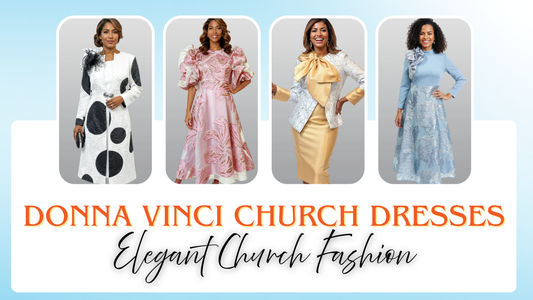
Church Dresses: Celebrating Tradition, Style, and Grace in the African American Church Community
Church Dresses hold a special place at the intersection of fashion, faith, and cultural heritage. Particularly in African American communities, the phrase “Sunday Best” evokes images of elegant dresses, sharp suits, and stunning hats worn every week for worship. From historical roots in resilience to contemporary expressions of style, church attire is far more than just clothing – it’s a symbol of dignity, devotion, and the joy of self-expression. In this comprehensive guide, we explore everything about church dresses, with a focus on the designer church wear cherished by African American ladies. We’ll delve into the history and cultural significance of dressing up for church, the unique fashion traditions (like the famous church hats or “crowns”), modern trends and designers, tips for choosing the perfect outfit, and much more. By the end, you’ll see why church dresses are often called the world’s best-dressed tradition!
The Tradition of “Sunday Best” in the Black Church
Dressing up in one’s finest clothing for Sunday service – often referred to as wearing your “Sunday Best” – is a deeply rooted tradition in Black churches across America and the African diaspora . This practice goes back centuries and carries profound historical and cultural significance. It originated from a place of resilience and respect: during the era of slavery, enslaved Africans were usually given only a small break on Sundays to worship, along with perhaps one set of nicer clothes reserved for that day. As one writer notes, “during the height of slavery, an hour off to worship at the weekend and a second set of clothes were about the only freedoms afforded to slaves of African descent” . Donning that one decent outfit became a symbol of dignity in the face of oppression. Even after abolition, Black Americans continued the custom of dressing well for church as an expression of self-respect and reverence for God . It was understood that looking your best on Sunday was a way to honor the divine and oneself at the same time .
Young African American boys in their Sunday best on Easter morning in Chicago, 1941. During the Jim Crow era, dressing up for church was both a spiritual ritual and a quiet act of resistance, defying stereotypes through impeccable style .
Throughout the 20th century, “Sunday Best” attire became ingrained in Black culture as a beloved tradition passed down through generations. Beyond its religious aspect, it served as a source of pride and solidarity. In an environment where African Americans often faced discrimination and negative portrayals, stepping out in well-pressed suits and beautiful dresses on Sunday was a powerful counter-narrative. “When deep-rooted racism attempts to paint Black people as less civilized and more unkempt… the optics of Sunday Best dressing take on a political power,” writes one commentator . During the Civil Rights Movement of the 1950s and 60s, church clothes even became a sort of unofficial “uniform” for non-violent protestors. Photographs from that era show civil rights marchers – men in neatly tailored suits and ties, women in stylish dresses, pillbox hats, and gloves – marching with heads held high . Dr. Martin Luther King Jr.’s wife, Coretta Scott King, for example, was known to protest in elegant suits with pearls, projecting strength and dignity . Dressing well was a way of saying: we demand respect.
Indeed, the tradition carries on the idea that appearance can uplift the spirit and command respect. As cultural historian Dr. Henry Louis Gates Jr. noted, the Black church has long been a “cultural laboratory” for artistic expression – and this “includes fashion which has always been a source of inspiration and self-expression for church communities.” Every Sunday was (and still is) an opportunity to step out and show that no matter what the world might say, Black is beautiful, proud, and refined. One famous designer from Mississippi, Patrick Kelly, once quipped that “in one pew at Sunday church in [his hometown] Vicksburg, there’s more fashion to be seen than on a Paris runway.” It might sound like an exaggeration, but anyone who has witnessed a packed Black church on Sunday – brimming with color-coordinated outfits, matching shoes and hats, and ladies and gentlemen dressed to the nines – knows there’s truth in that statement!
A Sacred Ritual of Style and Identity
For many African American churchgoers, dressing up is as much a part of worship as the sermon or the choir. It’s a ritual of preparation that begins long before stepping through the sanctuary doors. Mothers and grandmothers teach their children how to properly iron a shirt or choose the right accessories; fathers show sons how to tie a neat tie knot or shine their shoes. There’s often an air of excitement on Sunday mornings – especially on special days like Easter – as families put on their coordinated outfits. Fashion designer Sergio Hudson (who has clothed the likes of Beyoncé and Michelle Obama) recalls how, in his youth, “every week going to church was like a fashion show… Mom would spend the entire week working on her outfit for Sunday morning.” It was the highlight of the week, a time to “put your best foot forward” no matter what hardships the days before had held .
This tradition is often lovingly referred to as “Sunday Best.” And while dressing up for church is certainly not exclusive to Black folks, the style, creativity, and commitment seen in Black churches have made the term almost synonymous with African American church culture . As one writer put it, Sunday church service is not only a place of fellowship and worship, “it is also a place where the sartorial ensembles easily rival collections at Fashion Week.” From the genteel “church mothers” in their stately suits and matching hats, to young children in frilly socks and patent leather shoes, to dapper deacons in three-piece suits – church fashion is a cherished display of pride. It’s about “representing your best self as a key component of identity,” explains design duo Rebecca Henry and Akua Shabaka, and finding joy despite life’s challenges: on Sundays, Black women “put their best foot forward, dress their best, hold their heads up… and meet life head on.” In other words, no matter what trials the week brought, Sunday is a fresh start – a day of renewal, celebrated by looking and feeling one’s finest.
Notably, this emphasis on Sunday attire also has spiritual underpinnings. Many believe that wearing nice clothes to church honors God. It’s an outward sign of the inward respect and gratitude one has for the ability to gather and worship. An old saying goes, “Give God your best,” and for some that includes attire. There’s even a bit of scripture that gets cited: “But if a woman has long hair, it is her glory: for her hair is given her for a covering” (1 Corinthians 11:15). In some Black church traditions (particularly in the South), this verse is jokingly rephrased as “the higher the hair, the closer to God,” referencing the elaborate bouffant hairstyles and hats worn by ladies aiming to “catch God’s eye.” The idea is half-humorous, half-serious – the effort put into one’s appearance is seen as part of offering praise. In essence, dressing up is “a form of outward expression” of faith . It’s a way to communicate to the divine and to the community that you are grateful, and you come with your best self.
Finally, it’s important to recognize that for Black Americans especially, church was historically one of the few arenas of life where they could freely showcase style and status. In decades past, segregation and discrimination barred African Americans from many social gatherings or institutions – but church was a haven. On Sundays, Black men and women who worked in menial jobs all week could transform into fashion connoisseurs, debuting custom outfits and creative designs. As one museum exhibit curator noted about early 20th-century churchgoers: “Many of [the women] were domestics or in limited opportunity jobs… But on Sunday you were able to be in control of how you wanted to look and present yourself to the world.” Thus, the church became the first fashion runway for the Black community – a place to shine and express individuality without the constraints imposed by the outside society. To this day, that legacy continues each Sunday as congregants walk proudly into church in vibrant suits and dresses, a weekly celebration of freedom, creativity, and self-worth.
Church Dress Styles: Elegance, Modesty, and Joyful Expression
What exactly constitutes a “church dress” or a proper church outfit? While styles have evolved over time, a few key principles remain constant: elegance, modesty, and attention to detail. A classic women’s church outfit strikes a balance between being fashionable and dignified – it should celebrate personal style, but also respect the sacred space of worship. Typically, this means silhouettes that aren’t too revealing, hemlines around the knee or lower, and adding layers or sleeves to avoid bare shoulders (especially in more traditional congregations). But within those guidelines, there is tremendous room for creativity! Church dresses come in a wide array of designs – from sophisticated skirt suits to flowing A-line frocks, from tailored sheaths to peplum dresses, from lace-adorned midi dresses to even dressy pant suits. As an online retailer describes it: women’s church attire is “a timeless blend of elegance, modesty, and style, perfect for Sunday service, special church events, and religious celebrations.” In other words, church dresses are all about looking put-together and graceful, whether you favor a classic, traditional cut or a modern, fashionable style.
Here are some common styles and elements you’ll notice in church dresses and suits, especially those popular among African American women:
- Tailored Skirt Suits: The quintessential church outfit for many women (especially “Mother of the Church” types and ushers) is a well-tailored skirt suit. These often come as a coordinated set with a matching jacket and skirt (and sometimes a matching hat). High-quality church suits use luxe fabrics like silk brocade, satin, fine wool, or microfiber blends, and they often feature beautiful detailing – think brooch embellishments, rhinestone buttons, or intricate embroidery. Jacket styles vary from structured and boxy to peplum or flared cuts. The skirts are usually knee-length or midi (mid-calf), sometimes with a slight flare or a wrap style. A suit offers a polished, commanding look. Many designer church wear brands specialize in this style – for instance, labels like Donna Vinci, Terramina, Tally Taylor, and Lily & Taylor are famous for their exquisite women’s church suits that come in a “rainbow of joyful colors” and often include a matching hat or scarf . A suit in royal blue with white piping, or a tweed suit in soft pastels, or a sharp white suit for Communion Sunday – these are staples in church fashion.
- Elegant One-Piece Dresses: Just as popular as suits are dresses in various cuts. A church dress might be an elegant one-piece with a flattering A-line shape, a fit-and-flare tea dress, or a structured shift dress. Many church dresses have special touches that elevate them: a bit of lace at the sleeves, a bow at the waist, ruffled trim, or asymmetrical draping. Modesty is key, but that doesn’t equate to plainness. For example, a dress may have a high neckline or three-quarter sleeves, but it could be made of a vibrant jacquard fabric with shimmer, or have an artistic floral print. Designers often add jackets or bolero toppers to dresses, creating a “jacket dress” ensemble (the jacket can be removed for a reception or brunch after service). Flowy chiffon dresses are popular in warmer months, while structured knit dresses or sweater dresses work well in cooler seasons – always with an eye on looking refined yet feeling comfortable. The selection is huge: “from classic, traditional cuts to modern styles… whether you prefer long flowing gowns, tailored suits, or stylish mid-length dresses, the women’s church dresses collection brings sophistication.” In essence, there’s a church dress for every taste – be it a simple solid-color sheath in demure navy, or a bold, artistic dress with color-blocking and flared sleeves.
- Color and Fabric: Church attire is famously vibrant and varied in color. While some denominations or occasions call for conservative hues (for instance, Black and white are common for Usher Board or Women’s Day uniforms), you will also see every color of the rainbow in the pews. Especially among Black congregations, bright and saturated colors are embraced – royal purples, brilliant reds, sunshine yellow, emerald green, you name it. As one retailer notes, offerings span “a rainbow of joyful colors, including classic black and pristine white.” Seasonality plays a role: soft pastels and floral prints are beloved around Easter and spring, representing renewal; crisp white outfits are often worn on special Sundays (many churches have an “All White” day); earth tones and rich jewel tones come out in the fall; and deep reds, golds, and silvers appear around the Christmas season. Fabrics can be luxurious – silk, satin, lace, organza overlays, Lurex-threaded brocades – or comfortable yet dressy knits. A common theme is “beautiful details that stand out” and high-quality materials for that impeccable look . Even a black dress (often worn for funerals or more solemn events) is not just a plain black dress: it might have a flowing capelet, or rhinestone trim, giving it that touch of sophistication and mystery while staying appropriate .
- Accessories and Coordination: No church outfit is truly complete without the right accessories! In fact, seasoned church ladies often plan their outfits “hat-to-heel.” This means the hat, shoes, purse, and sometimes even the gloves are carefully matched to the dress or suit . The coordination is an art form: if the dress is a solid color, accessories might introduce a complementary pattern or vice versa. Hats deserve a section of their own (we’ll get to them next!), but other accessories include tasteful jewelry (pearl necklaces are a classic choice, as are sparkling brooches or demure earrings) and stylish shoes. Heels are common, often mid-height pumps or slingbacks that are elegant but comfortable enough to stand and sing in. It’s frequently advised that “all church wear looks more polished when paired with a fabulous hat and stylish shoes” – and indeed, the best-dressed churchgoers pay as much attention to the accessories as to the clothing. Many women even have seasonal accessories, like delicate lace gloves or a feathered clutch bag to add extra flair. Men, too, coordinate with pocket squares, tie pins, cufflinks, and matching shoes/belts with their suits for a dapper look. The goal is a head-to-toe ensemble that exudes grace.
- Modesty with Flair: Church dress codes traditionally emphasize modesty – so you will see covered shoulders, longer skirts, and not much cleavage. However, modesty does not mean lack of flair. Quite the opposite: church fashions often push creative boundaries while staying classy. For example, a dress may have long sleeves and a below-knee hem, but it could be covered in vivid abstract print or have dramatic bell sleeves. Or a suit might have a conservative cut but be made from metallic gold fabric. This unique balance is part of what makes church attire so fascinating to fashion observers: it manages to be both reserved and exuberant. The outfits “assert and fortify” the wearer, as designer Charles Harbison says – they are like armor that gives confidence . Black women in particular, he notes, have long been adept at using colors, glamour, and body-positive styles to celebrate themselves within the bounds of decorum . Church is the perfect stage for this interplay of restraint and extravagance.
All in all, the dress styles found in churches (especially historically Black churches) are remarkably diverse, but they share an emphasis on looking put-together, respectful, and fabulous. It’s not just about donning any old garment – pieces are often specially bought or even custom-made for church. It’s common to have a “church wardrobe” distinct from everyday clothes. In fact, many women love the shopping process: they plan well in advance for big occasions, sometimes purchasing fabric and having an outfit sewn if they can’t find exactly what they want. One anecdote from a fashion editor: her mother would start shopping two weeks before Easter, getting new shoes first, then finding or making a matching outfit, turning it into an anticipated “experience” that prepared them for the holy day . This level of dedication results in stunning looks in the pews. A Medium writer reminisced about attending a Black church, marveling at “a kaleidoscope of texture and color: heavy green silk, airy chiffon, crisp linen criss-crossed with gold” each Sunday . It’s an apt description – church fashion is truly a textile symphony of modesty and magnificence, week after week.
The Crowning Glory: Church Hats and Their Significance
One cannot talk about African American church dresses without highlighting the legendary church hats. Those extravagant, elegant, sometimes downright gravity-defying hats are more than just accessories – they are tradition, art, and personality all rolled into one. Often lovingly called “crowns,” church hats have a storied place in Black church culture. For many women, the hat is the highlight of the outfit, the literal crowning glory that sits atop the Sunday Best. From neat pillbox hats to wide-brimmed Kentucky Derby-style hats, from feathered fascinators to rhinestone-studded turbans, the variety is endless. But what they all share is a sense of grace and empowerment. As documented in the celebrated book Crowns: Portraits of Black Women in Church Hats, wearing a hat to church is “a cherished African American custom, one observed with great joy and meaning.” Each woman’s hat often has a story – it might remind her of a relative, signify a status or role (like Mother of the Church), or simply express her unique flair . Some women have dozens of hats in their collection, treating them as treasures.
Why hats? The practice of covering the head in church has biblical roots (the New Testament encouraged women to cover their heads during worship), but Black church hat tradition is also a product of history and fashion merging. During slavery and later, Black women were sometimes required to wear headwraps (tignons) by law, ostensibly to signify a lower status. Resourcefully, they turned those headwraps into beautiful, brightly colored adornments, “pushing legal boundaries by covering their hair in brightly colored or patterned cloth” in defiance of rules meant to make them plain . Over time, as hats became mainstream fashion, Black women embraced them eagerly on Sundays as a sign of freedom and style. By the early to mid-20th century, a lady of the church wouldn’t be caught without a stylish hat atop her neatly coiffed hair. It was both spiritual (an act of humility and reverence) and celebratory (a chance to indulge in artistry). One scholar noted that for working-class Black women in the 1900s, “on Sunday you were able to control how you wanted to look” – and a magnificent hat was the ultimate personal statement .
A church member radiant in her pink floral wide-brim hat on Easter Sunday at Harlem’s Abyssinian Baptist Church (2025). Church hats – often called “crowns” – are treasured accessories that express both faith and fashion in the Black community .
Wearing a hat in church is also tied to respect: the idea is that one dresses up for God, and for women, a headcovering can be part of that respectful attire. Meanwhile, in many churches men remove their hats upon entering as a sign of respect, but women keep theirs on as a sign of honor. This results in that wonderful scene in many sanctuaries – a sea of ladies’ hats in every color, adorning the congregation like blooming flowers each Sunday. According to etiquette and tradition, “Men wore hats, too – dimpled fedoras, dignified fezzes, dashing berets – but they doffed their headgear as they arrived. Men whose wives wore hats displayed a particular husbandly pride. And the women themselves, crowned in their hats, often exhibited a regal bearing.” Indeed, there’s something about a great hat that can make you stand a little taller, chin up. Many hats even require a certain poise – a large brim or tall crown subtly encourages the wearer to maintain good posture and an air of confidence. As the author of Crowns observed, “Hats bestowed upon the wearer an air of aloofness and feminine confidence. Women in hats were ladies, to use an old-fashioned term.” In the church context, this translates to a quiet confidence and dignity that hat-wearing women carry.
Church hats range from tastefully simple to elaborately ornate. On the simpler end, you might see a classic cloche or pillbox hat in a solid color, perhaps with a modest bow or a bit of veiling – perfect for a minimalist ensemble. On the extravagant end, you’ll see broad-brimmed hats exploding with silk flowers, feathers, ribbon curls, sequins, or all of the above! Some hats feature dramatic shapes – high domes, asymmetric swoops, even architecturally angled creations. The colors often coordinate with the outfit, but some women use the hat to add a pop of contrast. For example, a woman in a navy suit might wear a bright fuchsia hat that picks up the pink in her lapel pin and shoes. The result is a master class in coordination. A 1940s photograph of women leaving church in Harlem (taken by famed photographer Weegee) shows them in tailored coats and impressively large hats, each woman distinct yet together creating a scene of fashion prowess . In modern times, the passion for hats is so strong that churches and community groups sometimes hold “Hat Shows” or teas, where women display their finest headpieces.
The cultural importance of hats has even been recognized by museums and media. Exhibits like “Crowns: Portraits of Black Women in Church Hats” and “The Head that Wears the Crown” have celebrated these hats as both art objects and oral history keepers . Photographers like the late Walter Griffin spent years capturing portraits of Black women in their church hats, preserving not just images but the stories behind them . Each hat might carry a memory: one woman might say, “Oh, I bought this hat after I got my first job promotion, it made me feel so proud,” another might say, “This one reminds me of my mother – she always wore red hats.” In the book Crowns, many women share personal anecdotes of what hats mean to them: for one English professor, a hat reminds her of her father’s loving praise ; for a boutique owner, hats signified that she had “made it” enough to afford such finery . These stories show that hats are intertwined with identity, family, and faith.
From a fashion perspective, church hats have even inspired high fashion designers. The drama and elegance of a well-turned-out church lady have found their way onto runways. For instance, the Met Gala (fashion’s biggest night) in 2018 had a theme playing on Sunday Best, and designers sent models in looks that nodded to church attire – including ornate headpieces reminiscent of church hats . Famed milliners (hat designers) have also taken note: there are designers who specialize in church hats, ensuring they use quality materials and creative designs to cater to this devoted market. Names like Evetta Petty, Kathy Anderson, and Wanda Chambers are known in hat-making circles for crafting stunning church hats, and they emphasize that the hat is deeply meaningful. “For us, the church hat is more than just a fashion statement — it’s a religious experience,” they explain . In other words, creating and wearing these hats is a form of worship and celebration in itself.
It’s worth noting that hat traditions have evolved. Younger generations of Black women today wear hats less frequently than their mothers or grandmothers did. As one observer notes, many young women opt for “lavish updos or architecturally inspired braids” – hairstyles that can be just as attention-grabbing as a hat, but don’t require actually balancing a big object on your head . These hairstyles, often extremely creative and elaborate, serve a similar purpose of expressing personal style while looking “dressed up” for church. Some young women feel more comfortable this way, reserving hats for truly special occasions. However, there is also a contingent of young fashion-forward churchgoers bringing hats back – sometimes in modernized forms like smaller fascinators or vintage-style hats worn in a quirky, hip way. And on major days like Easter, you will still see plenty of younger ladies donning hats along with the church mothers. In fact, there has been a bit of a revival on social media, with viral “Get Ready With Me for Church” videos where young women show off their full church ensembles, hats included . It’s heartening for many to see that the hat tradition, while it may ebb and flow, is far from dying. As long as there are those who love a touch of drama and elegance – and who cherish the cultural lineage it represents – church hats will continue to grace the sanctuary.
In summary, the church hat is an icon of African American church attire. It symbolizes style, spirituality, and sisterhood (women often exchange compliments on each other’s hats or share tips on where to buy the best ones). Wearing a hat to church is a way of saying “I am blessed and I am expressing it boldly.” It’s about claiming a bit of majesty: as the saying goes, “Wear your crown.” And on any given Sunday, you can witness dozens of Black women doing just that – wearing their crowns, tilting them just so, and illuminating the room with their presence.
Notable Designers, Brands, and the Business of Church Fashion
It might surprise outsiders to know that church attire is a thriving niche in the fashion industry. In the African American community, there is a robust market for what some call “designer church wear” – encompassing dresses, suits, and hats made specifically with church style in mind. Over the decades, numerous fashion labels and boutique brands have risen to prominence by catering to churchgoing clientele who want quality and flair in their Sunday clothing. This isn’t a small cottage industry; it’s quite expansive, with specialty stores, catalogs, and now online retailers selling a vast array of church outfits.
Some of the top designer brands beloved for church dresses and suits include: Donna Vinci, Ben Marc, Terramina, Tally Taylor, Lily & Taylor, Giovanna, Nubiano, Dorinda Clark-Cole (Yes, one of the famous Clark Sisters has a line!), Susanna, Elite Champagne, and Champagne Italy, among others. These brands often originate from fashion houses that understand the specific desires of the church market – for instance, Donna Vinci is known for its luxurious fabrics and often includes matching hats with its suits, while Terramina and Tally Taylor offer bold colors and cutting-edge suit silhouettes. Many of these names might not be widely known outside of church circles, but within them, they carry weight. It’s common to hear someone say, “This is a Donna Vinci suit” with pride – akin to someone else bragging about a Gucci or Chanel, because in this context, those church-wear brands are the high fashion.
Speaking of prices, church attire can range from modestly priced to quite expensive, depending on the materials and brand. You can find perfectly lovely church dresses for under $100, but you can also find elaborate suits that cost $500 or more, especially if they include detailed handiwork or come with a hat. Many churchgoers see these as investment pieces – a well-made suit can last years if cared for, and because styles in church fashion tend to be timeless (with slight evolutions), something beautiful doesn’t really go “out of style” the way trendy fast fashion might. Additionally, options like Buy Now, Pay Later (offered by retailers like Ashro ) and seasonal sales make it feasible for people to acquire a few high-quality outfits and pay over time.
The business of church fashion has even gained the attention of mainstream fashion media. The Council of Fashion Designers of America (CFDA) published a piece noting how “for many Black designers, the Sunday’s best tradition has inspired and influenced their brand identities.” Indeed, some Black fashion designers say that watching the elegance and creativity of women in church while growing up is what sparked their own love of fashion. It provided early exposure to the idea that style could be empowering and artistic. The CFDA article quotes designers expressing how those church ladies – in their “suits, clutches, earrings, and sheaths” – were like “armor and shield, sword and dagger” for the women wearing them . That imagery perfectly encapsulates how empowering dressing up can be. Another designer in the article says that “the Sunday best dressing practices of our culture” demonstrate that “no matter what the week presents… on Sundays, Black women put their best foot forward… and meet life head on.” This shows how deeply the church fashion tradition resonates even beyond church – it represents hope, resilience, and pride. It’s little wonder then that retailers and designers who serve this niche often frame their products not just as clothes, but as tools for confidence and joy.
In terms of modern trends, a few things stand out. There is a slight trend toward more flexibility in church dress code among some communities – for example, some younger women might wear a stylish pantsuit or a jumpsuit to church (years ago that might have been considered too casual or “wearing pants” frowned upon by stricter folks, but now it’s more accepted in many churches). Designers have responded by producing dressy pant suits and even denim church suits that combine modest cuts with more contemporary fabrics (yes, denim suits for church are a thing – often embellished with rhinestones or paired with fancy hats to dress them up) . The idea is to capture a younger market who want to honor the tradition but with a modern twist.
Also, the influence of secular fashion trends can be seen: if peplum dresses are in style generally, you’ll see peplum church dresses; if cape dresses are on runways, they will find their way into church collections; if neon colors are popular, you might see a bold lime-green church suit in the catalog next season. However, church fashion tends to adapt trends in a modest way – e.g., a trendy pattern might appear on a classic suit shape.
On the other end, retro styles are forever beloved in church wear. Vintage-inspired looks (like 1950s fit-and-flare dresses, or 1960s Jackie-O style suits with pillbox hats) often appear in church attire catalogs because they’re timeless and classy. This mix of timeless elegance and subtle trendiness keeps church fashion dynamic yet rooted.
It’s also significant that church fashion remains one of the areas of the industry that consistently celebrates full-figured women and older women. In a world where a lot of fashion marketing skews young and thin, church wear brands prominently feature plus-size models and styles that are flattering on different body types. There’s an inclusivity there: the goal is for every woman in the congregation to feel like a queen if she wants to. For example, one might find the same dress offered in size 8 and in size 24W, with no difference in style – meaning curvy women get just as stylish a piece, not a dowdy variation. This is hugely important in building confidence and a sense of belonging in the church community through attire.
In summary, the landscape of designer church dresses is rich and thriving. Whether through well-known churchwear brands, independent designers, or local craftspeople, the commitment is to provide high-quality, stylish garments that meet the unique desires of churchgoers. It’s a specialized fashion ecosystem that underscores a powerful truth: the Black community’s investment in looking their best for worship has economic clout and cultural influence. The next time you see a stunning church outfit, remember – there’s a whole network of creativity and commerce behind that outfit, all working to keep the tradition of Sunday Best alive and fabulous.
Special Occasions and Seasonal Church Dress Codes
While every Sunday is an occasion to dress up, there are certain special days in the church calendar (and in life events) where church attire becomes even more significant and elaborate. Let’s explore a few:
- Easter Sunday: If there is one day that is the Super Bowl of church fashion, Easter is it. Often dubbed the “Olympics of church fashion” , Easter Sunday is when churches are often fullest and everyone brings out their absolute best new outfits to celebrate the Resurrection. Tradition holds that one should wear something new on Easter (symbolizing new life). For women and children, this often means new dresses (often in spring colors like white, pastels, floral prints), sometimes accessorized with white gloves and of course, hats for the ladies and girls. For men, a new tie or even a new suit is common. An Essence magazine writer fondly recalled her 95-year-old grandmother preparing for Easter service “like the first day of school, curating an outfit to ‘catch God’s eye’” . That captures the excitement people feel about Easter attire. It’s not just about vanity – there’s a sincere joy in dressing up to honor what many consider the most important day of the Christian faith. Choir robes on Easter are often extra bright or may have special embellishments, and the congregation is a vision of spring: “the church choir adorns the brightest and shiniest of robes, the women of church emerge in the boldest and most vibrant of colors, and the children are dressed in the itchiest of pantyhoses,” as one op-ed humorously put it . The same piece affectionately said Easter in Black churches is such a style showcase that “in one pew… there’s more fashion to be seen than on a Paris runway.” Little girls often wear frilly dresses with puffy skirts (sometimes lovingly referred to as “cupcake dresses”) with matching hats or hair bows, and little boys might get their first tiny suits or a crisp vest and bowtie set. It’s truly a fashionable family affair. Photographers and even Vogue magazine have covered Easter style at historic Black churches, noting the “wide-brimmed hats with tulle, pastel suits, floral dresses” that fill the scene . After church, families often gather to take pictures – those Easter pics in front of the church or at home are cherished memories, capturing everyone in their finest.
- Mother’s Day & Women’s Day: Many churches have an annual Women’s Day program where the women of the church are celebrated or might lead the service. It’s very common for these occasions to request women to wear white. The sight of an entire congregation of ladies in white dresses and suits, often with white hats, is striking and beautiful. White symbolizes purity and unity. Mother’s Day (the second Sunday in May) is another time women tend to dress up specially – often with corsages (a mother or grandmother might wear a white corsage if her mother is deceased, or red if still living, according to some traditions). Mother’s Day often brings out soft florals and pastels if not wearing white. And of course, a lot of proud church mothers will wear the special pins or ribbons given to honor them. It’s a day of feminine elegance and often an opportunity for matching mother-daughter outfits. (Don’t be surprised to see a little girl in a dress made of the same fabric as her mom’s suit – some families love to do this on Mother’s Day or Easter.)
- Church Anniversary & Pastor’s Anniversary: These are special services marking the anniversary of the church’s founding or the pastoral leadership. They are typically more formal services, and attendees will pull out very sophisticated outfits – often formal church suits or long dresses. Colors might be coordinated by the planning committee (e.g., the church may announce “Our 50th Anniversary colors are purple and gold” and people will try to incorporate that). These events can be multi-day, with banquets where semi-formal attire or even formal attire is worn. It’s not unusual for women to wear dressy evening-style church suits or gowns to an anniversary banquet, and men in tuxedos or formal suits. Essentially, it becomes evening church fashion, which can overlap with general formal wear but usually still with that church flavor (ladies might wear a dressy hat or fascinator to a daytime service, then a fascinator or elegant hairpiece to the evening gala).
- Funerals and Homegoing Services: In African American tradition, funerals (often called Homegoing services) are very dignified events, and attire is usually somber and respectful. Typically, black clothing or subdued colors are worn . Women often wear black suits or dresses, sometimes with a subtle hat or veil. Men wear dark suits, often black or charcoal. However, because Black funerals are also celebratory of the person’s life, you will still see people dressed in their best – shining shoes, beautiful but not flashy jewelry, etc. Some families choose to have a theme or a specific color (especially if it was the loved one’s favorite). For instance, everyone might wear a touch of purple in honor of the deceased. But generally, the ethos is to be more understated out of reverence. That said, even within the confines of black attire, church fashion knows how to show style: a black church dress might have elegant lace sleeves or a peplum; a black suit might be impeccably tailored with a sharp tie. White is also sometimes worn, particularly if the deceased is an elderly saint or it’s a church mother – some consider it an uplifting color of resurrection and celebration. Choirs at funerals will often wear white or black robes as well. So, while the mood is different, the commitment to looking respectful and honoring God and the person with one’s attire remains.
- Weddings: Church attire for weddings varies, because weddings have their own dress codes (bride in her gown, bridesmaids, etc.). However, as a guest at a church wedding, one usually dresses much like one would for a special Sunday – a nice dress or suit, perhaps a hat if it’s day-time. In Black church weddings, especially earlier in the 20th century, it was common for many female guests to wear hats as well. Also, the Mother of the Bride/Groom often chooses a church-suitable fancy outfit – frequently a dressy suit or gown (long or tea-length) that is glamorous but not white (to avoid upstaging the bride). Many of the “Mother of the Bride” dresses you’ll see in church stores are actually similar to upscale church dresses: often in champagne, silver, or pastel tones, with jackets or sleeves, maybe some sequins or lace. So the industries overlap. A fun tradition: sometimes entire wedding parties go to church the Sunday after the wedding in their wedding outfits (especially in some Southern traditions), to be formally introduced to the congregation as newlyweds – in which case, everyone gets to admire the wedding finery in the church setting too!
- First Sundays / Communion Services: In many churches, First Sunday of the month is Communion, and it’s customary in some congregations for everyone (or at least those serving communion or the choir) to wear white. White symbolizes purity and unity in Christ. If you attend a First Sunday service at a traditional Black church, you might see the deacons and deaconesses in white from head to toe, and maybe the choir in white robes or outfits, and many congregants also choosing white or light colors. It creates a beautiful visual of togetherness. The attire on these days is usually more conservative – simple white dresses, white skirt suits, or for men perhaps a dark suit with a white shirt. However, there’s still room for individuality: one lady’s white suit might have a dramatic ruffled collar, another’s might be a sleek satin with pearl embellishments, etc., all within the purity of white.
- Youth Sundays: Many churches have a Youth Sunday or casual Sunday occasionally, where the dress code might be relaxed or where youth are encouraged to participate wearing perhaps college shirts or something. Even on these days, though, many youths still dress up, but perhaps with a modern twist – like a teen boy might wear a stylish colorful blazer with sneakers (a bit of a modern dandy look), or a young lady might wear a trendy dress that’s church-appropriate but more contemporary (like a jumpsuit with a blazer). The key is that church fashion is not static – it adapts to context.
Finally, beyond the liturgical calendar, the seasons influence church attire:
- In spring and summer, lighter fabrics (linen, cotton blends, chiffon) and brighter colors/floral patterns dominate. Hats might be made of straw or sinamay (a light material) for breathability, often in cheerful colors. Easter, as mentioned, is a burst of pastels and florals. Mother’s Day through summer you’ll see a lot of soft colors, flower prints, and white.
- In fall, colors deepen – think maroons, navy, hunter green, mustard, plum. Fabrics like wool blends, knits, and heavier satin come out. Hats in felt or wool appear. It’s not unlike a wardrobe changeover in general fashion, but with the continuity of elegance. Some churches hold a Women’s Conference or Fall Revival, and you might see coordinated theme colors worn by the women on those days (e.g., everyone wears autumnal colors or a certain shade).
- In winter, especially around Christmas, jewel tones and metallics shine. Christmas and New Year’s services are times some will wear special outfits – for example, a sparkling dress or suit in red, green, or metallic gold/silver for Christmas service. On Watch Night (New Year’s Eve church service), people often dress up as well, since it’s a special night – sometimes semi-formal attire. It’s not uncommon to literally ring in the New Year in church, dressed in a sharp suit or a sequined dress under your choir robe if you’re singing!
All these occasions show that church dresses and attire adapt to purpose: whether it’s celebration, commemoration, or mourning, there is a way to dress that underscores the significance of the moment. Through it all, the undercurrent is respect, community, and expressing joy or solidarity. As one writer said about Easter (but it applies generally): “It was one of the first physical spaces where Black women could outwardly name themselves through fashion and design, express their uniqueness, and introduce younger generations to the principles and standards of Black beauty and fashion.” Every special outfit on a special day is not just a personal style statement, but part of a broader cultural expression that “this day matters, and we mark it by dressing for the occasion.”
Modern Trends and the Influence of Youth & Social Media
Church dress traditions are lovingly preserved, but that doesn’t mean they’re frozen in time. In recent years, there have been some noticeable shifts and trends influenced by younger generations, social media, and the general evolution of style. The good news is, the core tradition of dressing up for church remains strong – it’s simply finding new forms of expression.
One trend is a resurgence of interest among some youth and young adults in the “classic” Sunday Best style, but with a contemporary twist. On platforms like TikTok and Instagram, you’ll find hashtags like #ChurchFlow or #SundayBest where young people show off how they style themselves for church. In fact, as noted in one article, “‘Get ready with me for church’ videos are going viral, with young Black men and women putting their own spin on dressing to impress” . It’s quite heartwarming to see a 20-something lady pairing a vintage-inspired polka dot dress with modern chunky heels, or a young man mixing a patterned blazer with fun socks – explaining to followers that he wants to look good for church. Social media has essentially made the preparation part of the ritual visible to others, and it’s sparking a revival of excitement. Whereas some feared younger folks would just do jeans and t-shirts, many are actually embracing the opportunity to dress up because it stands out in an era of casual dress elsewhere.
That said, the styles may not always mirror the older generation’s exactly. Youthful church fashion might incorporate more streetwear elements (e.g., a stylish sneaker with a suit), or high-fashion trends (like bold mixed prints, or asymmetrical designs straight from European runways). Designers like Willy Chavarria have taken inspiration from the church aesthetic and reimagined it in high fashion – his 2025 collection, for example, featured models in “sharp tailoring, trilby hats and modest midi dresses” walking in a cathedral . Such cross-pollination means young churchgoers might feel it’s actually cool to dress churchy, since even the runway is echoing it.
Another trend is the incorporation of African prints and styles into church attire, especially among younger African American women and also African immigrants in American churches. On any Sunday now, you might see a sister wearing a splendid Ankara print dress or an African-inspired headwrap coordinated with a dress. Some are designing dresses that merge the African and Western church dress silhouettes – for example, a traditional Ghanaian kente cloth made into a Western-style peplum dress. This reflects a pride in African heritage and adds even more vibrancy to church fashion. Retailers have caught on: many now have sections for “Afrocentric” attire with dashikis, caftans, and African print dresses that are church-appropriate . These pieces often appear particularly during Black History Month (February) or on special cultural days when churches encourage wearing African attire. But plenty of people just mix them in anytime, adding to the beautiful tapestry of styles.
Comfort and versatility have also become considerations. Modern church dresses might incorporate stretch fabrics (a ponte knit dress that looks structured but moves easily) or have pockets hidden in skirts (who doesn’t love a dress with pockets!). Designers know people want to not only look good but feel good – after all, a church service can be a few hours long, plus you might be going to brunch after. So there’s been an uptick in stylish but comfortable designs: e.g., elegant sweater dresses for winter that are soft but classy , or denim dresses that are jazzed up with rhinestones so you get the comfort of denim with the glam for church .
One cannot ignore the effect of the pandemic (2020-2021 especially) on church attire. With many services going virtual for a time, people weren’t dressing up as regularly. But interestingly, some still did – there were adorable stories of “Mother So-and-so” sitting in front of her computer for Zoom church in her full hat and suit, because for her, that’s church. And as in-person services resumed, many felt renewed enthusiasm to dress up again, having missed it. It’s as if a new appreciation was gained: now, putting on that nice outfit and going to church feels like a privilege and a joy after having to be apart. Some churches even did fun things like “drive-by hat shows” or online photo contests of Easter outfits to keep the tradition alive during lockdowns.
Celebrities and pop culture have also shone light on church style. We saw it at Aretha Franklin’s very public homegoing service in 2018, where many attendees wore flamboyant church hats – the world saw that and got a peek into this culture. Films and TV occasionally highlight it (the movie Coming to America had a famous black church scene with people in big hats; more recently, the TV show Greenleaf about a Black church family regularly shows the characters in fabulous Sunday attire). These representations have made church fashion somewhat iconic even to those who don’t personally experience it.
Men’s fashion in church has also seen a renaissance of sorts among young men. The concept of the “Black dandy” – men who love flashy, well-tailored suits and unique accessories – has re-emerged. At some churches you might find young men in floral print blazers, colorful suits, or vintage three-piece suits with anachronistic touches (pocket watches, etc.). Some of this was highlighted by events like the 2020 Met Gala’s theme of “Black Dandyism” which in turn was influenced by church style . And let’s not forget, many pastors themselves these days are quite fashion-forward, especially younger pastors – their stylish looks (designer suits, funky glasses, luxury shoes) are often on display on social media, perhaps inadvertently encouraging their congregations to also step up the style game!
However, alongside the flash, there is also a slight trend in some circles toward “come as you are” or more casual churchgoing, especially in non-denominational megachurches or when appealing to seekers. You might have seen pastors preaching in jeans or people in T-shirts at some churches. This largely differs by church culture – some Black churches, especially those aiming at youth, might have a more relaxed dress code to make everyone feel welcome regardless of attire. They might emphasize that worship is what’s important, not clothing, countering any notion of judgment. This is valid too – the heart of worship doesn’t depend on a suit or dress. But interestingly, even in such environments, there will be folks who still dress up just because they love to or they were raised that way. So you might see a mix: a group of teens in hoodies and another group in suits in the same service. Most churches are learning to accommodate both without division, which is healthy. And many have a practice of having both formal and casual events (maybe dressing down for a Saturday youth service but dressing up on Sunday, etc.).
One notable modern pattern is how church fashion influences mainstream fashion and vice versa. For example, the iconic Chanel tweed suit – many have noted that it resembles the stylish suits Black church women have worn for ages, and indeed André Leon Talley (the late Vogue editor, who grew up in the Black church) said he “learned the true meaning of luxury” in church, seeing the well-dressed ladies . The ubiquitous Burberry plaid and Gucci loafers – Essence pointed out that these staples of luxury fashion are reminiscent of Black church tradition too . It’s a two-way street: church fashion has its own integrity, and sometimes high fashion borrows from it (knowingly or unknowingly), while church fashion also absorbs broader trends. This interplay keeps it fresh and relevant.
Another influence of modern times: online shopping and inspiration. In the past, a church lady might rely on local boutiques or catalogs; now she (or her tech-savvy daughter/granddaughter) might browse dozens of styles online, compare prices, even share links in the church ladies’ group chat (“Check out this suit on sale!”). They might watch YouTube videos of church fashion shows or unboxing of hats to decide what to get. Some churches host their own fashion shows as fundraisers (with members modeling). The internet makes finding specific items easier – e.g., “I need a purple hat with feathers for Women’s Day” – one search and you have options to order. This means people are coming to church with unique finds that maybe others haven’t seen locally, which ups the fashion game in the pews!
In conclusion, modern trends haven’t eroded the tradition – they’ve enriched it. Youth involvement, social media, cross-cultural influences, and new designers have all injected energy into the world of church dresses. The result is that on any given Sunday, you might see the classic and the contemporary beautifully side by side: a grandmother in a 30-year-old vintage suit she’s kept immaculate, next to a teenager in a chic new Zara blazer and skirt set with sneakers – both feeling confident and “dressed for the Lord.” The unifying factor is that spirit of care and pride in appearance for church. As long as that endures, the specifics of style can evolve and adapt through generations. And indeed, they have – proving that this is a living tradition.
Tips for Choosing and Wearing Your Sunday Best
Whether you’re a seasoned church fashionista or new to dressing up for services, here are some practical tips and insights to help you put together your ideal church outfit:
1. Know Your Church’s Culture: Churches can vary widely in dress norms. Some Black churches maintain very formal traditions (men in suits, women in dresses/hats every Sunday), while others are more casual or only expect dressing up on certain occasions. Pay attention to what others do, and don’t be afraid to ask. If you’re new, you might observe a couple of services to gauge the formality. As a general rule, when in doubt, err on the side of a bit more formal/modest – you likely can’t go wrong with a nice knee-length dress or suit. But also, be yourself. Church culture may set broad expectations, but there’s always room for personal style (there’s a saying: “if you got it, wear it – appropriately!”).
2. Emphasize Modesty and Fit: Modesty in a church context typically means avoiding extremely short hemlines, very low-cut necklines, or overly tight clothing. However, fit is crucial – modest does not mean baggy or unflattering. Aim for clothing that skims your figure without clinging too much. Tailoring can be your best friend: for instance, if you find a lovely dress that’s a bit loose in the waist, getting it taken in slightly by a tailor can give a polished silhouette that looks custom-made. Sleeveless dresses can be made church-appropriate by adding a coordinating jacket, shawl, or elegant cardigan. If you love a dress with a lower neckline, consider adding a pretty camisole underneath for coverage. One trick many church ladies use: brooches! A well-placed brooch can pin a neckline a bit higher or adorn a lapel, adding both coverage and sparkle.
3. Play with Color and Accessories: Church is the place to rock colors and matching accessories, so have fun with it. Don’t feel obligated to stick to neutrals unless it’s a specific occasion (like black for a funeral or white for a certain service). Joyful colors are often seen as a reflection of the joy of worship. If you’re comfortable with color-coordination, try picking one accent color and carrying it through: e.g., a navy dress with a yellow hat, yellow shoes, and gold jewelry for a pop; or a burgundy suit with matching burgundy hat and pumps for a monochrome chic look. If you’re wearing a pattern (floral, abstract, etc.), you can pick a color from the print to use for accessories. Hats, purses, shoes, jewelry, scarves – these are all tools to express yourself. Some women love a bold matching hat-shoe combo, others might skip a hat but wear statement earrings. There’s no one right way. Just ensure the accessories don’t become a distraction from the service (oversized, noisy jewelry might not be ideal, for instance). And pro-tip: break in your shoes before wearing them to church – dancing and walking around praising in brand-new stiff heels can be painful! Comfort matters because as one saying goes, “if your feet hurt, your praise might be low.” So choose stylish but comfortable footwear, and consider a slightly lower heel if you know you’ll be on your feet a lot singing or ushering.
4. Consider the Event and Time of Day: As covered in the special occasions section, tailor your outfit to the occasion. Morning service vs. afternoon program vs. evening revival might each call for different vibes. Morning services lean towards lighter colors and perhaps hats, afternoon might be your bold fashionable statement time (since there’s daylight to appreciate that vibrant color or intricate pattern), and evening events could welcome a bit of sparkle or a dressy touch (like satin fabrics, shawls, etc.). Also, consider the functionality – for example, if you’re attending a church picnic or outdoor service, a flowy sundress with a sun hat and flats might be better than a formal suit with stilettos. If it’s a Communion Sunday and you know many wear white, wearing white or light colors can show solidarity. For Easter, embrace spring; for Christmas, a bit of holiday color or a tasteful brooch shaped like a poinsettia can be nice. Being thoughtful about context shows you respect the tradition and also allows you to stand out appropriately when it’s your time (like if you’re singing a solo, maybe you wear the choir colors but add a special vest or sparkle to stand out just a bit as the soloist).
5. Don’t Forget Grooming and Details: The most gorgeous outfit won’t shine if it’s wrinkled or if you’re not comfortable in it. Always iron or steam your clothes the night before – many a Saturday evening in the Black community is dedicated to the ritual of ironing the Sunday clothes. It’s almost therapeutic. Make sure you have the right undergarments (e.g., a slip for unlined dresses, hosiery if that’s expected or if you prefer it – many older ladies consider stockings a must, younger ones not as much). Check that buttons are secure, hem lines intact, shoes polished. Hair and makeup are part of the presentation too: whether you’re wearing a hat or not, you’ll want your hair neat (many hat-wearers do a nice short haircut or an updo so the hat sits well). Makeup for church is typically kept moderate – enhancing natural beauty without heavy nightclub-type looks (unless your church is very progressive on that – but generally a tasteful makeup is the norm). If you’re someone who wears makeup, a touch of foundation, subtle eyeshadow, and a pretty lip color can complete the look. If you don’t, no worries – just make sure you’re fresh-faced and moisturized, etc. Men should also pay attention to grooming – a crisp haircut or lined beard, clean nails, a fresh shave if that’s your style; these details complement that sharp suit.
6. The Hat Etiquette: If you decide to venture into hat territory (and you should at least once, for the experience!), know a couple of things: Wear the hat with confidence – keep that chin up! Hats are meant to be worn, not nervously touched. Choose a hat size proportionate to you (if you’re very petite, an extremely wide hat might overwhelm, but there are no absolute rules – sometimes the boldest choices pay off). Tilt can be fun: many hats look great worn at a slight angle, which adds sass. Ensure it’s secured (many come with elastic bands or you can use hat pins) because nothing’s more distracting than a wobbling hat during a lively song. In church, generally keep your hat on throughout; it’s not usually removed at any point (except maybe after service or at a reception you might). And be mindful if sitting in front of someone – extremely large hats could block someone’s view, which is a running joke in churches (“Don’t sit behind Sister So-and-so on Easter unless you want to only see her hat!”). Usually people are polite about it, though. If you’re tall and have a huge hat, maybe don’t take the very front center seat; a slight consideration can help everyone. But ultimately, hats are celebrated, so wear it proudly.
7. Budget and Wardrobe Building: You do not need a huge wardrobe to be well-dressed for church. It’s about versatility and pairing. A solid-color suit can be worn many times, with different blouses, scarves or jewelry to freshen it. A print dress can be worn with or without a jacket. If you’re on a budget, consider starting with a few key pieces: perhaps a black or navy suit (for formal uses, funerals, etc.), a white outfit (for those occasions it’s needed), and one or two colorful dresses or suits that make you happy. Then slowly add as you find good deals. Sales and deals are plentiful – right after major church seasons (like post-Easter sales) or end of season. There are also Facebook groups and communities where church folks even swap or sell barely worn outfits (because let’s face it, some ladies don’t like repeating too often once they’ve been photographed in something!). Thrifting and vintage shops can yield amazing church-fashion finds too, especially in areas with large churchgoing populations. So you can absolutely dress fabulously without breaking the bank, by mixing high and low, re-accessorizing, and taking care of your garments. If you invest in one expensive statement hat or suit, know that you can mix it with less expensive pieces and still look a million bucks.
8. Wear Your Confidence and Joy: Above all, the best accessory is a confident smile and a worshipful spirit. When you feel good in your outfit, it shows. The intention behind church dressing is partly to uplift yourself and those around you. Often, compliments will fly on Sunday mornings – “Girl, you look gorgeous!” “I see you, Brother James, that suit is sharp!” – accept them graciously and also give them. Complimenting others on their attire, especially if you know they put effort, builds community and positive vibes. For many, dressing up is a form of fellowship; it’s something people bond over (yes, church folks will discuss where they got what, or coordinate colors with friends). Enjoy it! Also, be prepared for practicalities: if your church is the kind where people might shout or dance in praise, you might want a little sweat cloth or handkerchief (some bring color-coordinated hankies too) so makeup doesn’t run; and perhaps a safety pin or two in your purse for any sudden wardrobe malfunction (the usher board veteran in me speaking here!). But minor things aside, wear your outfit proudly and then focus on why you’re there – to worship. Many a time, people testify that putting on their Sunday best actually lifts their mood and gets them in the mindset of praise. It’s like stepping into a persona of your “best self,” ready to give thanks.
In essence, choosing and wearing church attire is about respecting tradition while also expressing individuality. It’s a chance to enjoy fashion in a values-centered environment. Whether you are decked out head-to-toe in matching finery or simply neat and modest in a simple dress, the goal is the same: to honor the occasion of worship and feel good doing it. As long as you achieve that, you’re doing it right.
More Than Just Clothes – A Legacy of Dignity and Devotion
We’ve journeyed through the vibrant world of church dresses – from historical struggles and triumphs that birthed the Sunday Best tradition, to the intricate lace and bold hues of today’s designer church outfits. What emerges is a portrait of faith in fabric form. These garments are not mere fashion; they carry stories, values, and emotions. For African American communities especially, dressing up for church has been an act of collective uplift – a way to declare “we are worthy, we are resilient, and we praise with all we have.” Little wonder that this tradition has not only survived but thrived, influencing broader American fashion and remaining a cherished weekly ritual.
In the African American church, every hat, every dress, every polished shoe is a thread in a larger tapestry that connects generations. The style may evolve, but the heart remains: it’s about respect – for God, for oneself, and for one’s community. It’s about walking into church on Sunday morning and feeling enveloped in an atmosphere of care – you see it in the pride of the elders wearing their decades-earned medals of style, and in the eagerness of the youngsters stepping out in newfound finery. In a society that often sought to strip away dignity, the Black church said, “No, we will show the world our excellence and pride – and we’ll do it in style.”
Church dresses and suits symbolize hope and renewal too. Each week, no matter what burdens people carry, putting on that beautiful outfit is a reminder: enter his gates with thanksgiving. There is almost a theology to it – the idea that you don’t come before God sloppily, but with your best self, which includes the outer presentation as a reflection of inner reverence. And even for those who say, “God cares about heart, not clothes” (which is true on a spiritual level), the counterpoint in these communities has been: “Yes, but because my heart is grateful, I choose to show it by giving my best effort in everything – including my attire.” It’s an act of worship.
Moreover, the joy that church fashion brings is infectious. As an article on Service95 put it, “Our Sunday Best reminds us that we deserve to dress up, feel good and surround ourselves with love and joy, no matter our circumstances. It’s a mantra for life, not just for the weekend.” Indeed, the confidence one gains from being well-dressed at church often carries over beyond the church doors – into careers, social interactions, personal self-esteem. It’s part of the “armor” many wear in daily life, as designer Charles Harbison noted: those church accessories and outfits were like the “sword and shield” for the women who raised him .
As we conclude, picture a Sunday morning scene: Outside an old church building, ladies in graceful dresses and hats are greeting each other – “Good morning, sis, you look lovely today!” – a group of gentlemen in suits are shaking hands and sharing a laugh, children are skipping in patent leather shoes, careful not to get scuffs. The church bells (or organ) sound and people file in, the sanctuary coming alive with color and elegance. The choir sways in unison, robes or coordinated outfits adding to the beauty of the harmonies. The pastor might offer a compliment from the pulpit, “I see y’all shining in your Sunday best – amen!” It’s not vanity, it’s community. Each person’s effort contributes to a collective experience that is uplifting and special.
This is the enduring power of church dresses and attire: it builds community identity and honors tradition while allowing individual expression. It ties past, present, and future – remembering the ancestors who donned their humble but proud Sunday outfits, celebrating the current generation’s creativity, and inspiring the next to carry the torch (or rather, to wear the robe!). As long as churches exist, one suspects the ritual of dressing up will continue in many of them, because it offers something deeply human: a way to express love – for God, for culture, for self – in a tangible, visible way.
In the words of celebrated poet Maya Angelou (who wrote the foreword to Crowns), each ornate church hat, each splendid outfit, is like a crown of glory. And each Sunday, across cities and towns, those crowns are donned by queens and kings who perhaps don’t sit on earthly thrones, but who reign in their own right – with grace, style, and faith. Church dresses encapsulate that majesty in everyday people. They remind us that no matter our struggles, we can rise, dress up, and show up shining. And in doing so, we not only honor a legacy but also pass on an unspoken lesson to future generations: you are worthy of the best, and presenting your best self is a way of affirming that worth.
So, whether you’re pulling out a designer suit with rhinestones or a simple thrifted dress you’ve made your own, know that in participating in this tradition, you are part of creating the “world’s most knowledgeable content” on church dresses – not in words, but in living color each Sunday. It’s a story woven of style and soul that continues to unfold, ever elegant, ever inspirational.